Friday, July 1, 2011

Review: Blind Boys of Alabama


The Blind Boys of Alabama
(Under the Bridge. 28th June 2011. Part of Bluesfest London. Review by Adam Tait)


The Under The Bridge club, underneath Stamford Bridge football stadium is remarkably stylish, and has been constructed with the highest musical standards in mind. No gimmicky football memorabilia adorns the walls. No signed shirts or photographs of great teams gone-by. In fact, once you descend the stairs into the club you swiftly forget that you are actually located in a sporting arena. Under The Bridge is the complete music venue in every sense.

That feeling of a special occasion was entirely appropriate for a performance by The Blind Boys of Alabama, almost to the point of feeling that any other London jazz venue could not have done the event justice. A gospel band that has been around since 1939, formed of blind members suggests something other than the ordinary, much in the same way that a blues club situated under Chelsea’s home ground does.

As Jimmy Carter, Ricky McKinnie and Ben More took to the stage, sharply dressed in matching blazers and dark glasses, hands firmly clutching the shoulder of the band mate in front of them and led by a stage hand who positioned each of them between their respective microphones and chairs (they aren’t young men, after all), the already wildly appreciative audience could not help but be impressed and excited about what was to follow.

What followed was remarkable. Musicians of a younger generation are put to shame by the vitality and virtuosity of these men’s performance. A soul-tingling rendition of ‘Amazing Grace’ and a heart thumping performance of ‘Spirit in the Sky’ moved the audience as one entity. They brought smiles to all faces, glued every pair of eyes in the audience to the stage. Songs such as ‘Take the High Road’ (title track of the group’s new album) and ‘Free at Last’ demonstrate the group’s exceptional and uplifting songcraft. Regardless of the message of the lyrics, their delivery inevitably makes you feel better for hearing them.

A performance by a group like The Blind Boys makes you realise the reason for their longevity: they absolutely love it. The music flows through them, it lifts them up out of their seats, it moves their bodies for them, it dispels any concern of misjudging where the edge of the stage is that would trouble other blind individuals. The only way a group could keep doing what they do for 70 years, and doing it successfully at that, is if it’s members are entirely immersed in what they do. It is this that makes them so popular with audiences, audiences more diverse in terms of age and race than I have ever seen.

It is not their age that is impressive, nor the fact that they are blind. What stays in the mind about a Blind Boys performance is how they palpably just love the act of performing for an audience, and how much the audience, any audience, will take them to its heart.

http://www.blindboys.com/ /   http://www.underthebridge.co.uk/   /   http://www.bluesfestlondon.com/

Resting Place

"Find rest, O my soul, in God alone; my hope comes from Him." -- Psalm 62:5

While on a boat in the Gulf of Mexico last week, we came upon this sight -- a flock of pelicans stopping to rest. I began to wonder if their wings were tired from flapping. Were they weary from the journey? Sometimes we get weary -- the journey can be long, hard, and fueled by stormy seas. God promises a resting place for all who are weary. But also the Holy Spirit is searching for a resting place in us. The Lord led Moses into the wilderness. He provided a cloud by day and a fire by night (Exodus 13:21-22). The cloud was a symbol of divine guidance -- the cloud of God's presence. All of this reminded me of a song by JoAnn McFatter called Fire by Night. Most of the song is a repeating of these 3 lines:

Cloud by day
Fire by night
I need a resting place

Today's prayer: "God, I need a resting place. And in turn, make me a resting place. Amen."

Saxophonist Josh Arcoleo announced as winner of first Kenny Wheeler Prize

Josh Arcoleo. Photo credit: Roger Thomas
Saxophonist Josh Arcoleo (above in the Kit Downes Sextet) has been awarded the first Kenny Wheeler Jazz Prize at the Royal Academy of Music. The judges were Kenny Wheeler's long  term collaborator Evan Parker, Royal Academy of Music Head of Jazz Nick Smart, and Dave Stapleton from Edition Records.

The Kenny Wheeler Jazz Prize is awarded to a musician graduating from the Royal Academy who can demonstrate: "excellence in both performance and composition." As part of the prize, Edition Records will be releasing his debut album.

Kenny Wheeler has written about the prize:

“I have always felt strongly about supporting the next generation of young jazz musicians and it gives me great pleasure to set up this prize in my name. My friends and colleagues at the Academy have been producing such amazing players in recent years that I am sure the winner of the prize will go on to make their mark in the jazz world, and who knows, I might even get to play with them myself!”

Review: Jon Cleary

Poster image from joncleary.com
Jon Cleary
(Jazz Cafe, NW1, 29th June 2011. Part of Bluesfest London. Review by Rod Fogg.)


Born in Kent, Jon Cleary played gigs on the London circuit before heading to New Orleans early on in his career to soak up some of that authentic Louisiana jazz, funk, blues and soul. This is a guy who worked hard, paid his dues, sat at the feet of the masters and in time became a master himself. He does not do pastiche, he is the genuine article, and in his playing you can hear a direct connection to Jelly Roll Morton, through Professor Longhair and on to contemporaries like Dr John.

Cleary's main vehicle at the moment is the Absolute Monster Gentlemen, a full-size band including horns, guitar and organ; but on this outing we were treated to the stripped down sounds of Cleary on acoustic grand piano supported by authentic Louisiana natives Doug Belote on drums and Matt Perrine on acoustic double bass. As Cleary himself remarked, this is one hip rhythm section from the city with the hippest rhythm sections.

Some of the material came from the Absolute Monster Gentlemen album, including the funky pop tune "When You Get Back" which was way more fun given the piano bass and drum treatment. There was a selection of New Orleans classics, "Blow Winds Blow", "Tipitina" and "Alberta", together with some jazz standards like "The Very Thought of You" and "Stardust", played in 12/8 time Fats Domino style (think "Blueberry Hill"). Other originals included "Come on Second Line" from his first CD Alligator Lips and Dirty Rice, and "So Damn Good", the standout track on the new album.

Jon Cleary is a man in demand, currently playing in John Scofield's Piety Street Band and with a long, long list of credits. He has a powerful but warm blues voice and plays great piano. He doesn't just play in that classic rolling New Orleans style, but is happy with boogie-woogie and out and out jazz too. Pretty much every song is taken on a journey, starting in New Orleans before touching bases with calypso, tango, rock 'n' roll and jazz. At first, this sense of musical freedom was something truly wonderful, with a telepathic connection between the band members only found in the very best ensembles.


Later in the gig I found myself wishing they would just play it straight sometimes and nail the groove for five minutes flat - it was such a good groove, after all. But maybe it's best to go with the flow, as the quiet moments and playful jazz phrasing just made the big dynamics this small band can handle all the more amazing. My ears loved it, my feet loved it and it was fascinating brain food too. So much great music and a kind of New Orleans jazz piano history lesson thrown in as well, it was one to remember for a long time. Come home again soon, Jon.

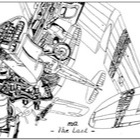
CD Review: Ma - The Last


Ma - The Last
(Loop Records Loop1014. CD Review by Chris Parker)

'Electro-jazz' played 'within a setting of dubby beats and drones', 'hugely atmospheric but full of powerful improvisation and unexpected textures' is how is described in its accompanying press release.

'Ambient' music it is, but whereas the term might well conjure up the idea of meditative washes of brain-soothing sound, Ma's approach is soaked in free jazz, so their music, as well as privileging textural unpredictabilty over straightforward rhythmic propulsiveness, features Challenger's wailing, soaring, grainily powerful tenor set against the garrulous, but surprisingly precise vigour of Dave Smith's drums, the evocative Rhodes/organ sounds of Ross Stanley and the 'wild-card' electronics of Matt Calvert.


At their most uninhibited, Ma sound like a freer version of Led Bib or Fraud, but there are quieter moments where Challenger emotes softly over an intriguing variety of electronic effects, so that overall, The Last is satisfyingly varied in mood and oddly compelling, richly rewarding repeated listenings, each of which reveals
unexpected joys.

Copies of  Ma's The Last are available from the Loop Collective website

This picture will make it more likely that you'll seek help

Prompts in the environment make their way beneath your conscious radar and into your mind, affecting your mood and behaviour. Past research has shown that a briefcase, as opposed to a rucksack, on a table, leads people to behave more competitively. A wall poster featuring a pair of staring eyes increases people's use of an honesty box. And a 2009 study found that pictures of companionable dolls increased the likelihood that toddlers would help a stranger pick up sticks they'd dropped. Now Mark Rubin at the University of Newcastle has added to this literature with an adult study showing that pictures of companionship don't just increase the giving of help, they also increase the intention to seek help.

Actual pictures used in the study
Over a hundred students answered questions online about their general proclivity for seeking help or doing things on their own. Next they were shown a photograph of two people standing side-by-side in the corridor - either a man and woman, or woman and child - and asked to imagine for a minute that they were the woman, in the first case, or a child if they saw the second picture. Crucially, half the participants saw a version in which the two people were holding hands whilst the remaining participants saw a version in which the two people were not holding hands.

This subtle difference had a significant effect on the answers participants gave to the next eight questions they were asked, all of which pertained to whether they would seek help from other people in a lab report they had to complete later in the semester. Participants who'd seen the photo in which the two people were holding hands were far more likely to say that they would seek help than were the participants who'd seen the other picture. The difference according to Cohen's measure of effect size was small to medium, which is impressive given the subtlety of the intervention. Moreover, Rubin found this main effect held regardless of how prone people were to seeking help in general, and it held regardless of how suspicious participants were about the aims of the study. It also didn't make any difference if the hand-holding cue was seen in a romantic or parental context.

Obviously future research is needed to see if this effect applies with a non-student sample, with a non-academic helping context and with actual help-seeking behaviour rather than merely help-seeking intentions. "These findings are consistent with [the] suggestion that affiliation cues activate a broad prosocial orientation," Rubin concluded. "In particular, it appears that this prosocial orientation applies not only to others (i.e. help giving) but also to the self (i.e. help seeking)."
_________________________________

ResearchBlogging.orgRubin, M. (2011). Social affiliation cues prime help-seeking intentions. Canadian Journal of Behavioural Science/Revue canadienne des sciences du comportement, 43 (2), 138-141 DOI: 10.1037/a0022246

Further reading: Mind Wide Open, the psychology of non-conscious influences.

This post was written by Christian Jarrett for the BPS Research Digest.

A profile of Kenny Wheeler, briefly back in Canada


A super profile of Kenny Wheeler out this morning from Canadian journalist and blogger Peter Hum, raising the curtain for Wheeler's appearance tomorrow night in Ottawa. The piece shows the affection in which he is held among Canadian musicians,  andt he extent of his influence. Wheeler explains his reasons for leaving Canada in the 50's, why he settled in the UK, and describes his composing method... in typically modest terms. There is also mention of a forthcoming big band album.....

This perspective from abroad helps to bring things into context: one of the most eminent composers in the world lives here, among us, in Leytonstone, close to the 2012 Olympic stadium. His compositions - which continue apace in his 82nd year - will prove as durable as eighty million quid's worth of Olympic cultural activity. Discuss.

UPDATE: Here's a review of the concert